A Leadership Cost Most Organizations Never Calculate
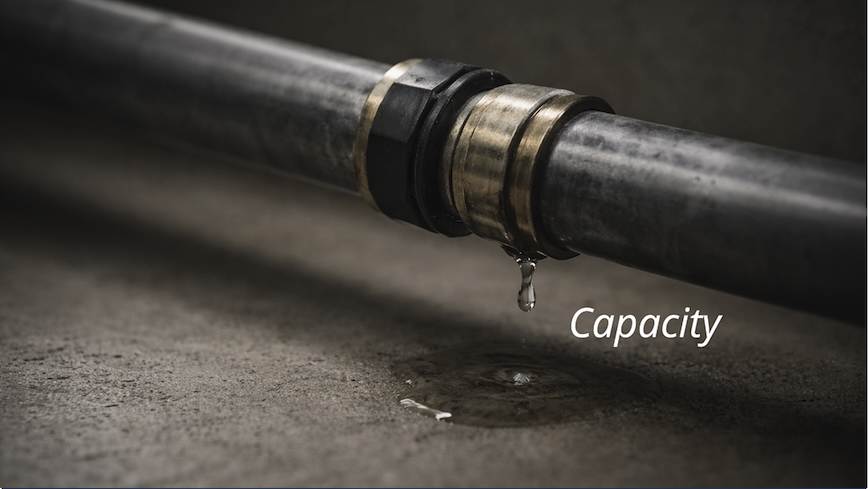
It’s capacity leakage.
Teams rarely lose capacity all at once. Instead, it disappears gradually through small, almost invisible losses. Misalignment creates unnecessary rework. Simple decisions take longer than they should. Leaders compensate for gaps instead of addressing them, and decision ownership remains concentrated in the hands of a few people because they’re the only ones trusted to make the call.
None of these issues feels significant on its own. In fact, most seem completely manageable in the moment. But over time they compound. Execution slows even though everyone is working hard. Leaders stay involved in work they should have outgrown, and the organization begins relying on effort instead of design to maintain momentum.
What makes this especially difficult to recognize is that it often happens during periods of success. Revenue is growing. Customers are happy. The business appears healthy from the outside. Meanwhile, capacity continues leaking away beneath the surface because the organization has gradually accepted those losses as normal.
Most organizations never calculate the cost of that hidden drag. They simply adapt to it.
The first step isn’t solving the problem. It’s recognizing that it’s there. Once leaders begin seeing where capacity is silently escaping, they start asking different questions, making different decisions, and addressing issues that were previously treated as isolated frustrations. That’s when the organization begins moving forward with greater clarity and far less unnecessary effort.
If this sounds familiar, I’d be glad to explore what you’re seeing inside your organization. Sometimes an outside perspective is all it takes to recognize where capacity has quietly been leaking away.