When the Organization Grows Around the Workaround
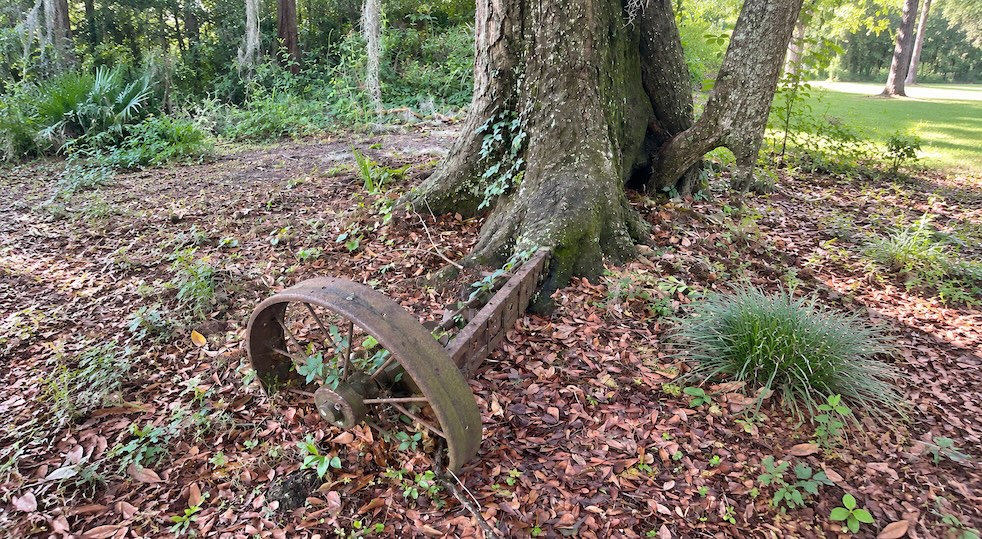
I took this picture while walking through a local park.
What caught my attention wasn’t simply the old piece of equipment that had been left behind. It was the tree growing around it. Whatever purpose that equipment once served, it had clearly been there for a very long time. The environment changed, the tree continued to grow, and eventually it simply adapted around what remained.
Organizations do something very similar.
A workaround gets created to solve an immediate problem. A responsibility gets handed to someone because they’re capable and will make sure it gets done. A decision starts flowing through a particular leader because, at the time, that’s the easiest way to keep things moving.
Most of those decisions make perfect sense when they’re made. More importantly, they usually work.
That’s why they stay.
But the organization doesn’t stay the same. It grows, roles change, new people arrive, and the business becomes more complex. Yet the solution that made sense for an earlier version of the organization often remains, and people simply learn to operate around it.
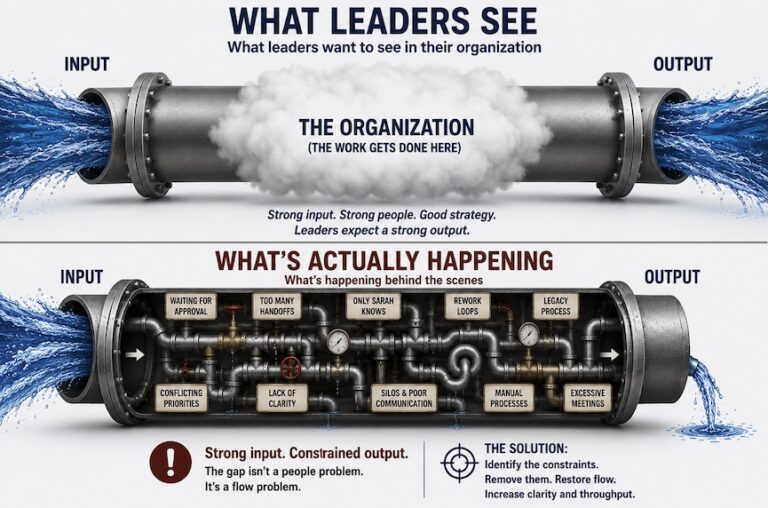
Often, it’s the most capable people who make that possible. They step in, carry responsibilities that should live somewhere else, hand-hold a process through its gaps, or become the person everyone knows can get something unstuck. Because they keep making it work, the underlying issue becomes increasingly difficult to see (and more costly).
Eventually, the organization has grown around something that may no longer need to be there.
The work still gets done, but the cost has been absorbed into the way the business operates. Leadership capacity gets consumed. Decisions take longer. Dependencies increase. Experienced people spend time doing work the organization should no longer require of them.
This is one of the patterns I’ve come to think of as Organizational Creep: when your own solutions become the very things holding you back.
The question isn’t whether the decision made sense at the time. It probably did.
Does it still, and should it remain?
If this resonates, take a look at the things your organization has simply learned to work around. The responsibilities that landed with someone years ago and never moved. The decisions that still travel further up the organization than they should. The processes your best people quietly hold together because only a select few know how to make them work.
Those are often the places where Organizational Creep becomes visible.
If you’d like another set of eyes on what may be hiding and costing you in plain sight, I’d be glad to explore what you’re seeing inside your organization.